What the freezer does, and what it does not
A freezer does not make coffee fresher. It slows the changes that flatten roasted beans, so the coffee you put in is roughly the coffee you take out. Coffee Bros makes the same point plainly: freezing saves flavor that is already there, and cold storage will not rescue beans that went in stale or dull.
The other half of the problem is moisture and smell. Roasted beans are dry and porous, and the air in a freezer carries humidity and food odors, especially when the door opens often. An airtight container limits both. So does opening the freezer less: Coffee Bros suggests retrieving everything you need in one pass rather than standing in front of it. This routine is for whole beans; ground coffee is more exposed and behaves differently.
Divide the beans before anything goes into the freezer
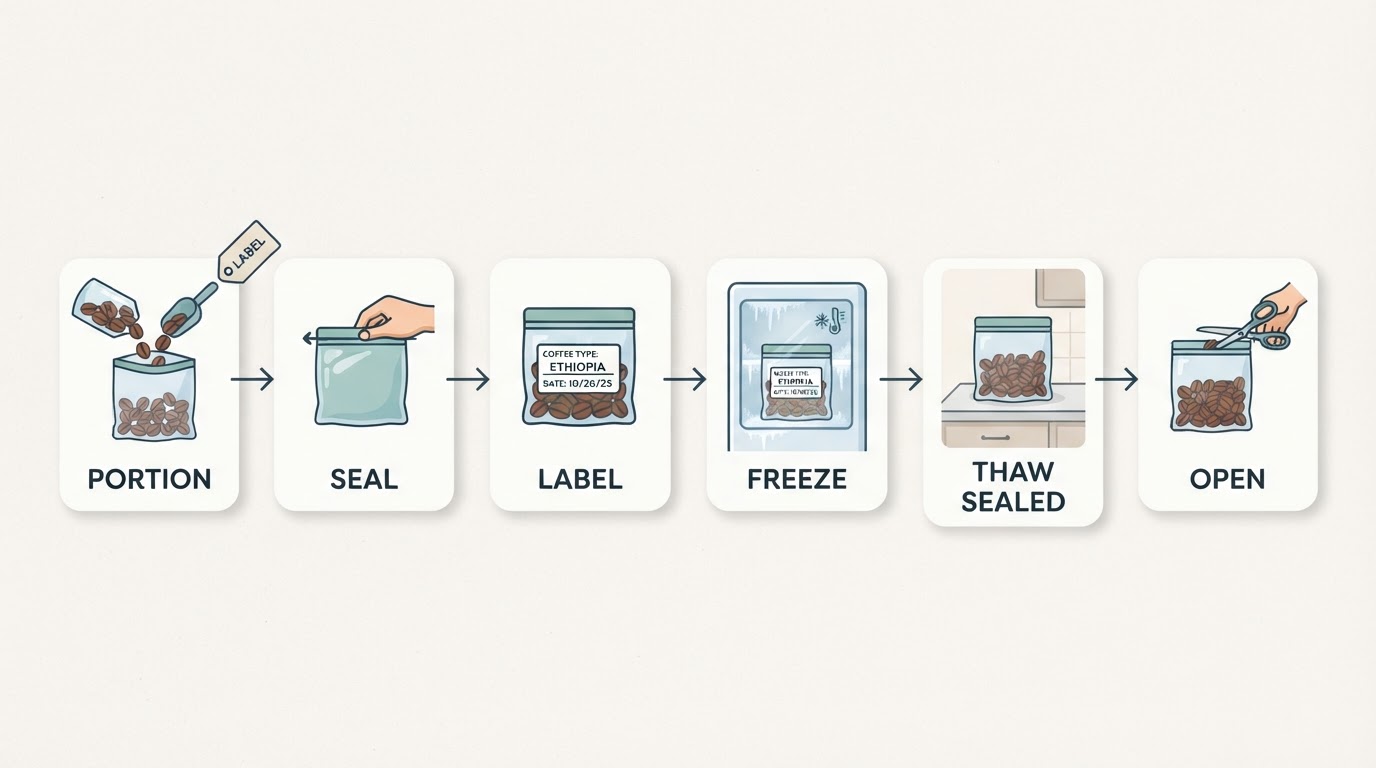
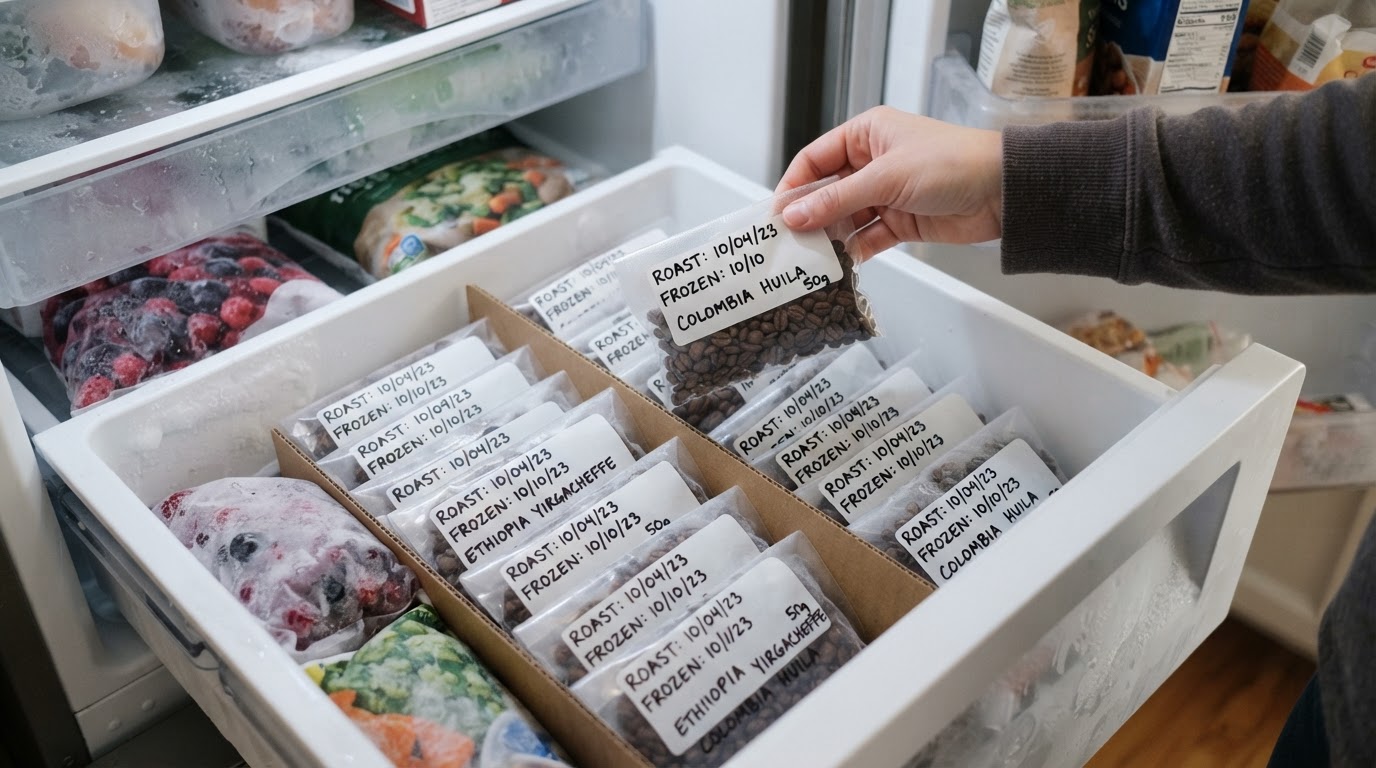
Portion first. Divide the bag into amounts you will realistically brew once a portion is open, so each container is opened once rather than revisited every morning while the rest of the stock warms and cools. There is no universal portion size: a household pulling two shots a day and one brewing a full pot every morning will draw the lines in different places. Coffee Bros recommends small airtight batches, sized so you do not disturb the main stock — the roaster's practical guidance, not an expiry rule.
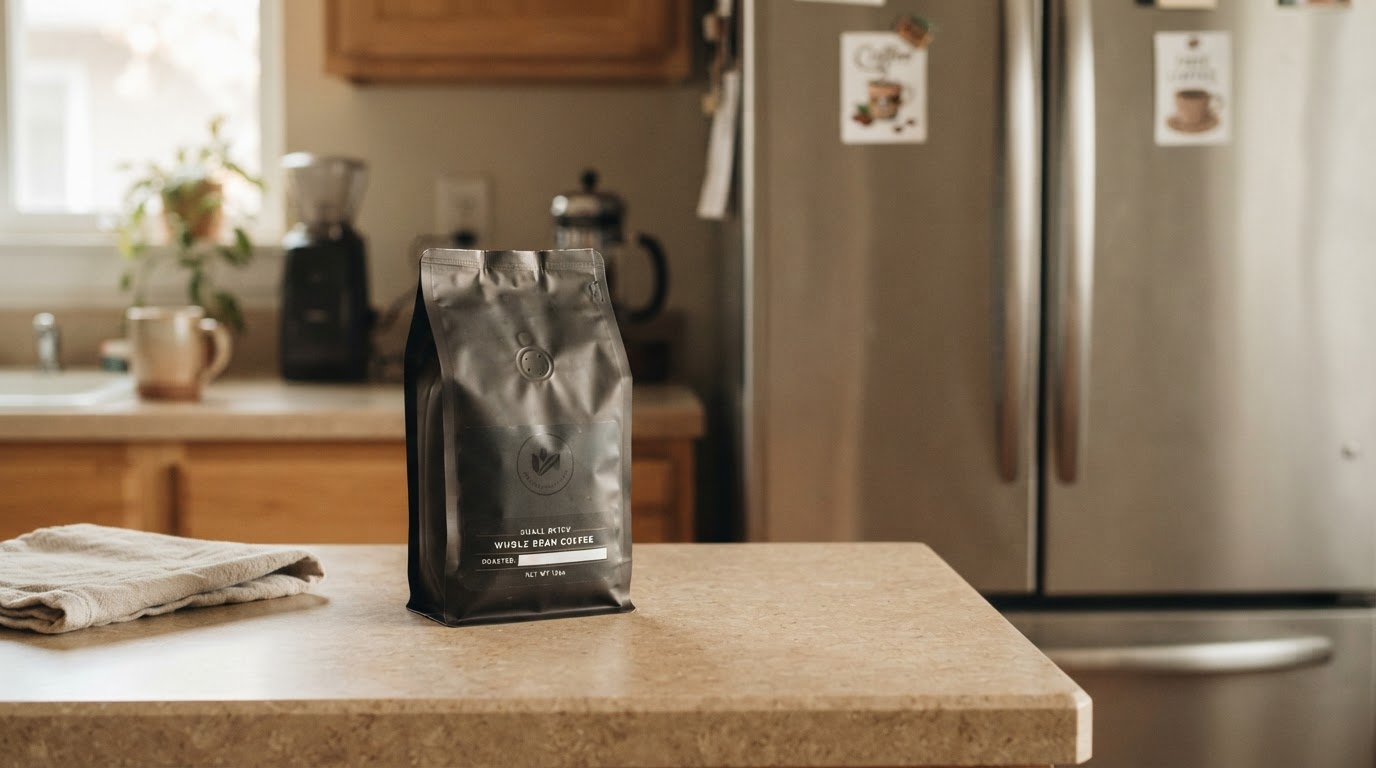
The container matters more than the shape. A vacuum sealer is ideal; a heavy freezer bag with the air pressed out works if the closure is sound. Retail coffee bags often have a one-way degassing valve that releases carbon dioxide from freshly roasted beans. Gas escaping outward through that valve is normal and does not show that the bag leaks inward or that it is unsuitable. The valve is still not designed as a freezer seal, so whether a particular bag keeps air and moisture out depends on the bag and how it closes. Check that the closure is intact and that the bag is meant for freezer use; if it is not, or you cannot tell, move the beans into a container the maker describes as airtight and freezer-suitable, and follow its instructions.
Once a portion is sealed, label it with the roast date and the freezing date. The roast date tells you what the roaster intended and how much of its preferred window has already passed. The freezing date records when your own storage started. If you also note the origin or blend, you can identify what you want without opening anything, which is the point of labeling in the first place.
Choose a cold, steady spot
Put the sealed portions at the back of the freezer, where the temperature stays steadier than in the door. A rigid container around them adds another barrier against odors from fish, cheese, or spices. Flat bags stack easily and thaw faster than a solid block, though the seal matters more than the shape.
The goal is simple: the stock stays cold and closed, and one portion at a time comes out. Every extra opening lets in humid air and makes the freezer work harder.
Let a portion warm up before you open it
The step most people skip is the one that decides whether the method works. Do not open the container while the beans are still cold. Warm, humid room air meeting cold beans can condense on their surface, which is the moisture problem the airtight seal was there to prevent. Leave the sealed portion on the counter until it reaches room temperature, then open, grind, and brew.
That advice applies to a batch you intend to brew through. If your routine is single doses ground straight from frozen, the same principle applies to the bulk stock: keep it closed, keep it dry, and do not let the main container breathe every time you make a cup. The sealed warm-up is not a rule that every frozen dose must thaw; it is what keeps an opened batch from starting its life wet.
Once a portion is open, keep it airtight at room temperature and finish it before opening the next one. Returning an open bag to the freezer means another warm-up later, and another chance for condensation. One portion in use at a time is easier to manage than several half-open bags.
The fridge is not a milder freezer
The refrigerator is a tempting middle ground, but it is a poor one for coffee. It is opened constantly, it holds moisture and food odors, and it sits above freezing, so it does not slow the changes in the beans the way a freezer does. If you will brew the current bag soon, a cool, dark cupboard is simpler. Freeze the surplus; keep the working bag out of the fridge.
Freezer storage is not the same as roast resting
Resting and freezing answer different questions. Resting is the interval a roaster recommends between roasting and brewing so the coffee can settle; it is counted from the roast date and varies with the roaster, the coffee, and the brew method. Our guide to resting coffee after roasting walks through those windows. Freezing is what you do with the part of the bag you will not brew during that interval.
The labels record history, not a reset. A portion carries the roast date it arrived with, and freezing slows change rather than proving that every aging and degassing process stopped. Writing both dates keeps that clear and tells you which portion to use next.
A simple freeze-and-open routine
- Write the roast date on the bag when the coffee arrives.
- Divide the beans into portions you will finish once a portion is opened.
- Seal each portion airtight, press out the air, and add the freezing date.
- Store the portions flat at the back of the freezer, inside a rigid container.
- Move one portion to the counter while it is still sealed and leave it until it reaches room temperature.
- Open it, brew, and keep the remainder airtight until it is finished.
No calendar or checklist is required beyond that. If you can tell which portion is oldest and the rest of the stock stays closed, the system is working.