Why "best espresso machine reddit" produces a hundred answers
A thread with that title looks like one question. It is really a stack of different questions: best for straight espresso on a tight budget, best for milk drinks for two people, best for someone who wants to press one button before a meeting, best for a household that will never weigh a dose. Each reply answers the version the writer had in mind.
The format also rewards confidence. A specific machine name, a strong claim and a short list read better than "it depends", so a recommendation that was correct for one person at one budget can travel as if it were universal. Treat each reply as a single data point with hidden conditions, not as a vote.
That is why the useful output of a research session is not a model name. It is a shortlist of constraints you can check, plus a list of claims you still need to verify before you pay.
The consensus that survives the noise
Remove the model names from the advice that keeps reappearing and the same five variables remain. They hold across budgets because they describe the physical job, not a brand.
The grinder matters as much as the machine
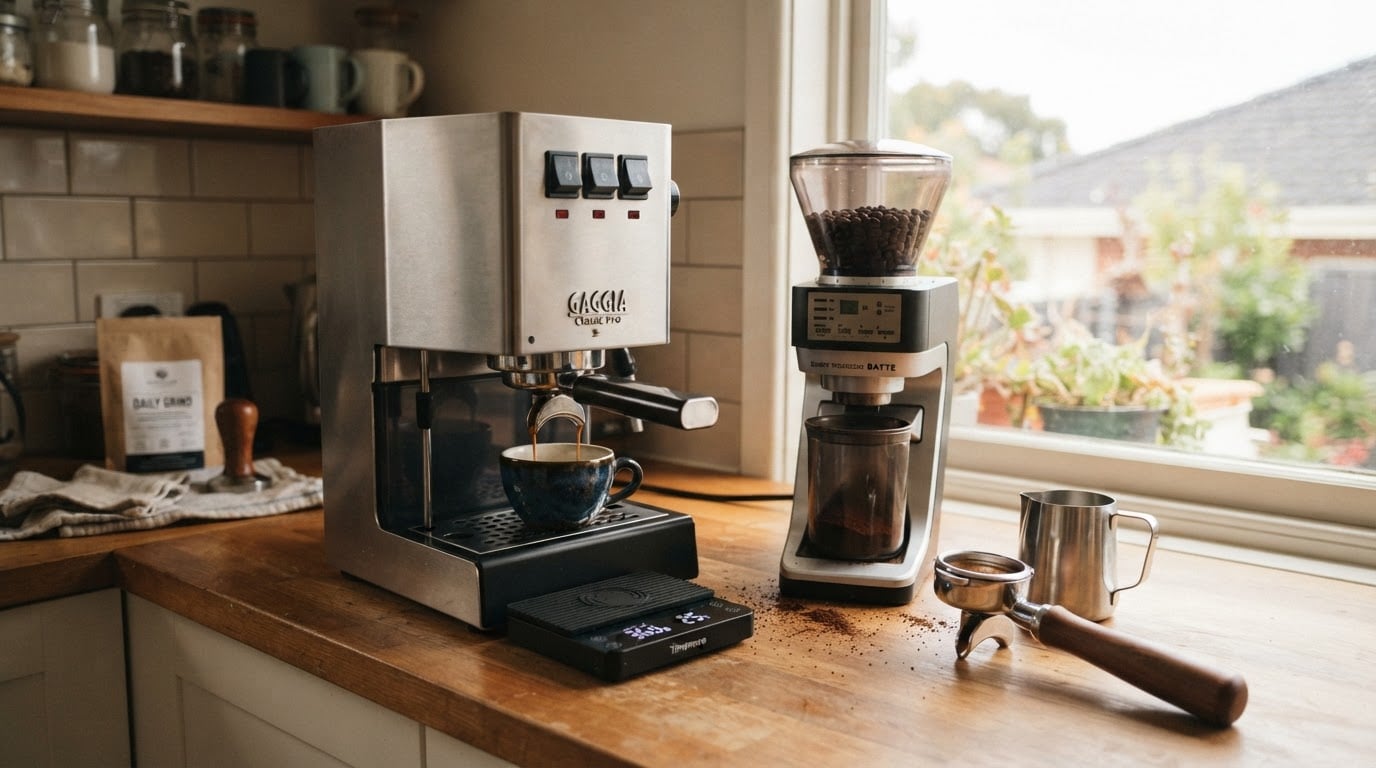
Espresso is a narrow extraction problem. The grinder determines how evenly the coffee is broken down, how much you can adjust between a shot that runs too fast and one that chokes, and how repeatable tomorrow's shot is. A consistent burr grinder paired with a modest machine usually produces better, more stable espresso than an expensive machine fed by a blade grinder or pre-ground coffee.
This is also the most common hidden cost in a Reddit recommendation. If the reply names a machine but not a grinder, ask what the person used. If they used pre-ground coffee, their opinion tells you about convenience, not about espresso quality.
Fresh beans and a scale
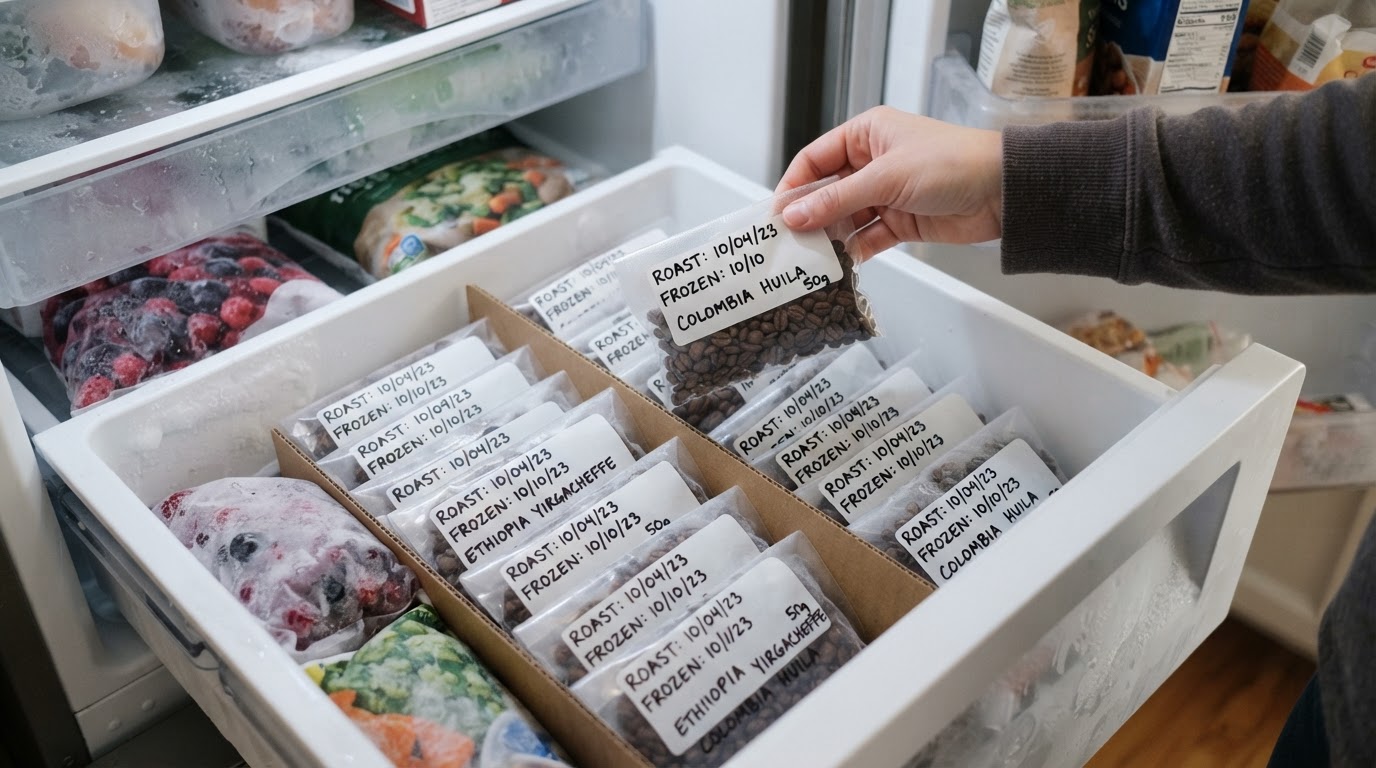
Beans lose the gases and aromatics that make espresso taste like more than bitterness. A bag with no roast date, or a bag opened months ago, will make a good machine look inconsistent. A scale turns "a bit more coffee" into a repeatable dose, which is the first step toward a repeatable shot.
These are the two cheapest upgrades in the workflow, and they change the result more than most machine features. Confirm that your chosen machine and basket can hold the dose you intend to use, and that you have room on the counter for a scale.
Temperature stability
Brew temperature swings push a shot from sour to bitter without any change in the coffee. A machine with a PID controller, a stable boiler and a short recovery time is easier to dial in than one that cycles broadly. But "PID" on a spec sheet is not proof of stability: it may control steam temperature, or the machine may still struggle to recover between back-to-back shots.
Ask what the temperature control actually does, how long the machine takes to recover, and whether the group head is heated. If those details are missing, treat the claim as unverified.
Milk workflow
Your drink menu decides how much the steam system matters. If you drink straight espresso, a small single boiler can be enough. If you make two lattes every morning, a machine that forces you to wait between brewing and steaming turns a five-minute routine into a fifteen-minute one. Heat-exchanger and dual-boiler designs solve that by separating brew and steam, at a higher price and with more maintenance.
Automatic milk systems are a real convenience, but they add parts to clean and seals to replace. Confirm how the frother is cleaned and whether replacement parts are available before you count it as a shortcut.
Cleaning and water
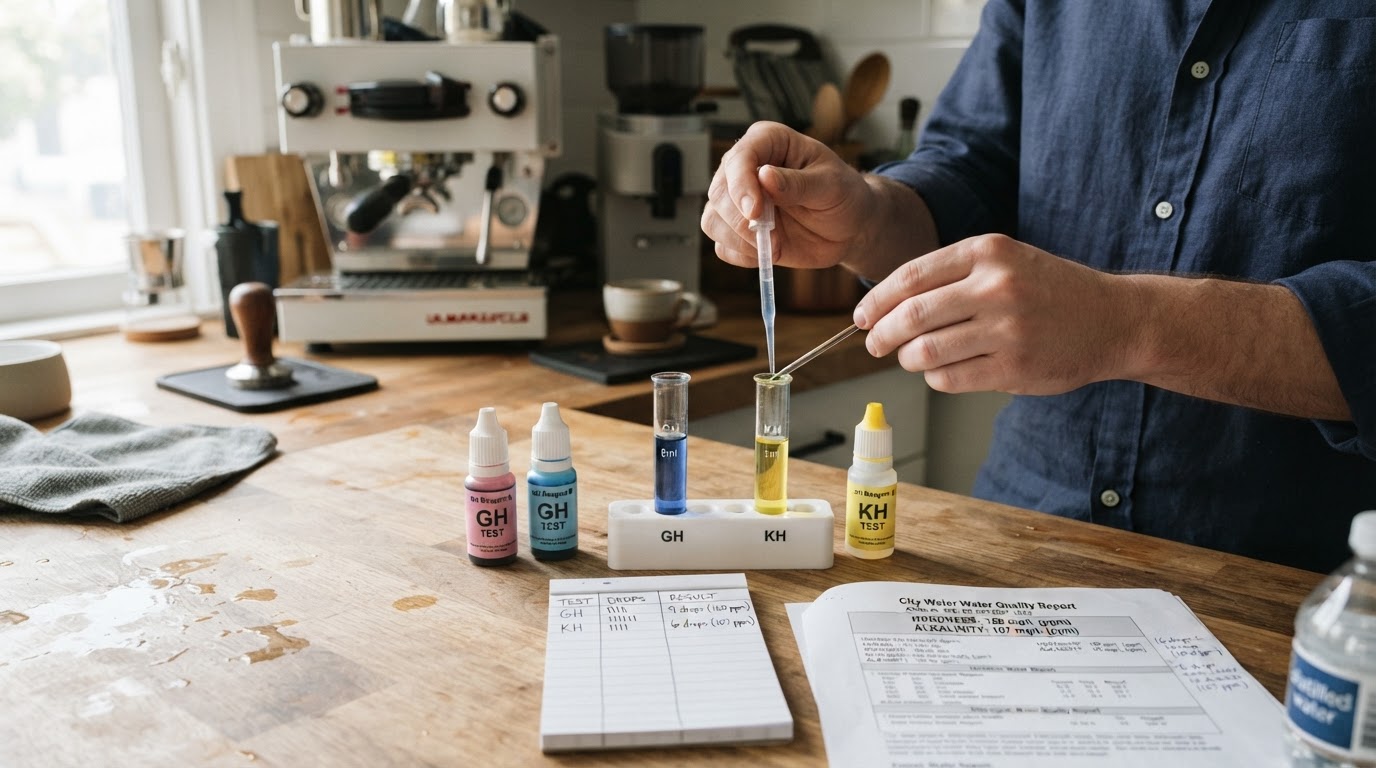
Every machine needs a maintenance routine, and the routine is part of the ownership cost. Backflushing, descaling, drip-tray care and group-head cleaning all take time. Hard water shortens the life of any boiler, so a filter or softer water is often more valuable than another feature.
Ask what the manufacturer's cleaning schedule looks like, whether the machine has a three-way valve and backflush routine, and what a descaler or filter will cost per year. If a recommendation never mentions maintenance, it is incomplete.
Where the consensus splits
The five variables above are stable. What changes is how much each one matters to you, and that is where two reasonable people can recommend opposite machines.
- Budget ceiling. A tight budget is better spent on a capable grinder and a simple machine than on a feature-rich machine with a weak grinder. A higher budget buys consistency, recovery and build quality, not a different definition of good espresso.
- Drink menu. Straight-espresso drinkers can accept a small boiler. Milk-heavy households should prioritize steam recovery or an automatic frother.
- Patience and workflow. Manual and semi-automatic machines reward attention and punish haste. Super-automatics trade control for repeatability. Neither is better in the abstract; they fit different mornings.
- Space and noise. A built-in grinder saves counter space but limits your upgrade path. Vibration pumps are usually louder than rotary pumps, which matters in a small apartment or an office.
- Service and parts. A machine that cannot be repaired locally is a disposable appliance, whatever its reputation online.
What "best" means at each budget and use case
No single machine is best for every reader, so the honest version of a Reddit-style verdict is a tier with a "best for" statement and a list of what you give up.
Tier | What you are really buying | What gets cut | Confirm before you buy |
|---|---|---|---|
Tight-budget starter | A simple machine and a separate burr grinder | Temperature stability, steam recovery, build quality | Grinder included in the budget; basket size; parts availability |
Mid-range semi-automatic | Repeatable shots and a real steam wand | Convenience; you still dose, tamp and clean | PID behavior; recovery time; group-head service |
Built-in grinder all-in-one | Counter space and a shorter workflow | Grinder upgrade path; more places for grounds to hide | Burr type; adjustment range; cleaning access |
Super-automatic | One-button repeatability | Control over dose, grind and extraction | Milk-system cleaning; bypass chute; service network |
Small-office or high-volume | Recovery and durability under back-to-back drinks | Price, size and simple maintenance | Duty cycle; water supply; warranty terms |
Tight-budget starter: best for a first machine and a patient learner
This is the tier where the grinder decision matters most. A simple machine with a standard basket and a separate burr grinder gives you room to learn, and it keeps the upgrade path open. Pressurized baskets can make supermarket coffee drinkable, but they hide grind problems, so they are a starting point rather than a finish line.
What you give up: temperature stability, fast steam recovery and the solid feel of a more expensive machine. What to confirm: the total cost with a grinder, whether the portafilter and baskets are a standard size, and whether spare parts and service are available where you live.
Mid-range semi-automatic: best for the weekday espresso routine
This is usually the sweet spot for a household that makes one or two drinks a day and is willing to spend a few minutes on the workflow. You are paying for better temperature control, a more capable steam wand, and a machine that can be serviced rather than replaced.
What you give up: the one-button convenience of a super-automatic, and some counter space. What to confirm: how the temperature is controlled, how long recovery takes after steaming, and what the cleaning routine involves.
Built-in grinder all-in-one: best for small kitchens and short workflows
An all-in-one saves space and removes a separate purchase decision. The trade-off is that the grinder and the machine age together, and the grinder is usually the less capable half. That is acceptable if you want a compact setup and do not plan to upgrade the grinder later.
What you give up: the ability to change grinders without changing machines. What to confirm: burr type, the range of grind adjustment, how easy it is to clean the grind path, and whether replacement burrs are sold.
Super-automatic convenience: best for a busy household that values repeatability
A super-automatic grinds, doses, tamps, brews and often handles milk. It is the right answer for a household that wants the same drink every morning with minimal attention, or for an office where nobody wants to learn a workflow.
What you give up: control. You cannot easily change dose, grind or pre-infusion to chase a better shot, and the machine decides how much of the workflow to hide. What to confirm: how the milk system is cleaned, whether there is a bypass for pre-ground coffee, how often the brew group needs service, and who repairs it.
Small-office or high-volume: best for back-to-back drinks and shared use
Shared machines need recovery, a clear cleaning routine and a service path. A domestic machine used by ten people a day will spend more time recovering than brewing, and the failure modes are usually water, cleaning and wear rather than the recipe.
What you give up: simplicity and a low purchase price. What to confirm: the duty cycle, whether it can be plumbed or needs a refill routine, the warranty terms for commercial use, and the response time of a local technician.
How to turn an anecdote into a check you can run
A recommendation becomes useful when you can test its conditions. When a thread names a machine, ask these questions before you add it to your shortlist.
- What grinder and beans were used? Without that, the report describes a different workflow from yours.
- How long has the person owned it? First-week impressions are about excitement and novelty; a year of ownership is about reliability, cleaning and parts.
- What drink do they make? A machine that is excellent for espresso may be frustrating for two lattes a day.
- What did they upgrade from? The comparison tells you which problem the machine solved.
- What maintenance do they do? A machine that is only praised by people who never clean it is not being evaluated honestly.
- What would they change? Owners usually name the real limitation when you ask directly.
Then verify the specification at the source. Manufacturer documentation is more reliable than a retailer listing, and model revisions can change parts without changing the name. Confirm the basket size, pump type, boiler or thermoblock design, warranty terms, and whether the accessories you need are included. If a thread is more than a model generation old, check whether the machine is still sold and still supported.
Red flags that make a recommendation unsafe
- A confident verdict with no mention of budget, grinder or drink menu.
- A price that appears only in a screenshot, with no retailer or date.
- "Buy once, cry once" advice that ignores the reader's ceiling.
- Claims about temperature stability, pressure or flow with no measurement behind them.
- A recommendation for a discontinued model, or for a model whose revision has changed.
- A workflow that depends on modifications, custom parts or a service the reader cannot access.
- Any thread where the strongest argument is the number of people repeating the same name.
None of these make the recommendation wrong. They make it unfinished. A useful recommendation tells you the conditions under which it is true.
A decision checklist you can finish in ten minutes
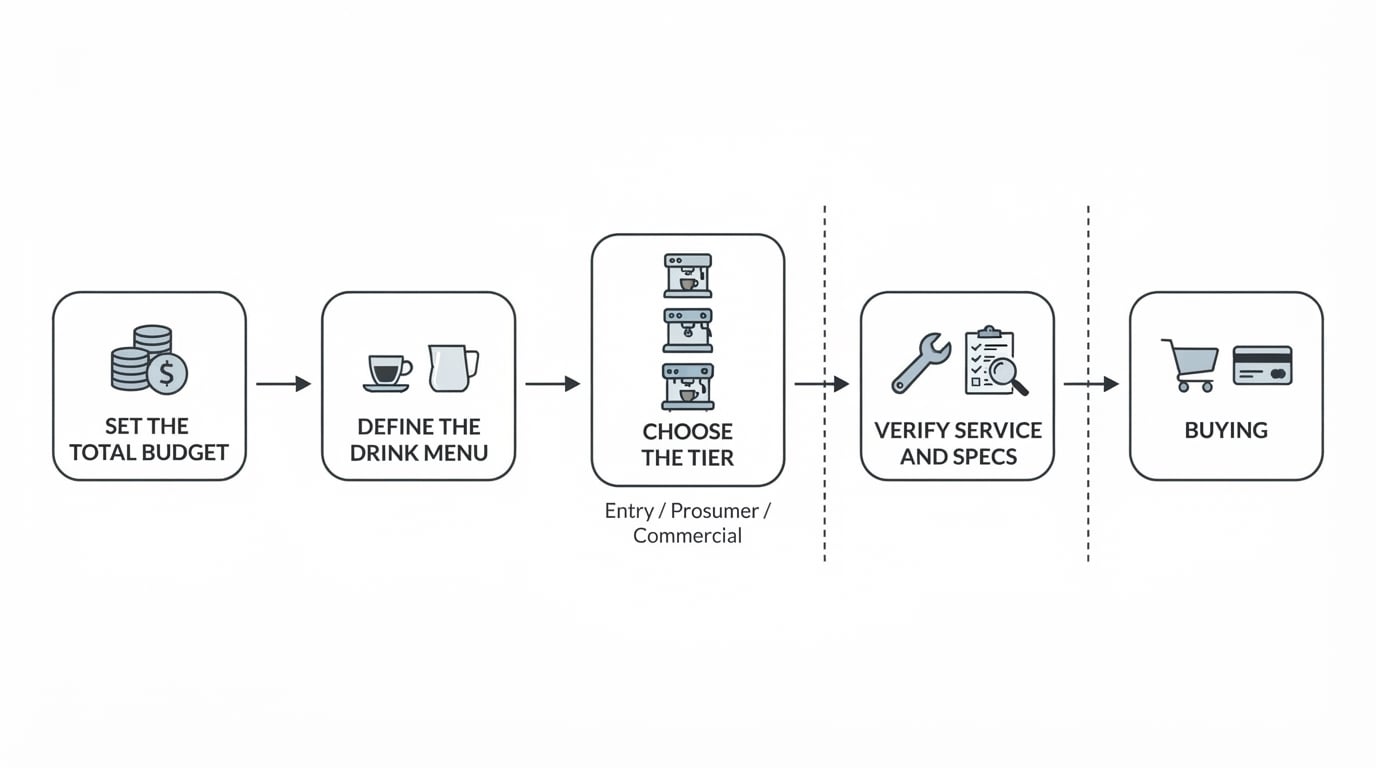
- Set a total budget that includes the grinder, a scale, a tamper if needed, water treatment and cleaning supplies.
- Write down your drink menu for a normal week: espresso, milk drinks, or both.
- Decide how much attention you will actually give the workflow on a rushed morning.
- Measure the counter space and the height under your cabinets.
- Choose the tier that matches those constraints, then shortlist two or three machines in it.
- For each one, confirm the grinder requirement, temperature control, steam recovery and cleaning routine.
- Check the service path: local repair, available parts and warranty terms.
- Read the return policy before you order, and keep the packaging until you have lived with the machine for a week.
FAQ
Is Reddit actually useful for choosing an espresso machine?
Yes, if you use it as a source of failure modes and ownership details rather than as a poll. Threads are good at surfacing what annoys people after a few months: cleaning, steam recovery, part availability and workflow friction. They are weak at giving you a ranked answer for your budget, because every reply comes from a different set of constraints.
Do I need to buy a separate grinder?
If you want to control extraction, a separate burr grinder is usually the better allocation of budget. A built-in grinder is a reasonable compromise when space is the limiting factor, but it limits your upgrade path. A blade grinder or pre-ground coffee will hold back even an expensive machine.
How much should I spend on the machine versus the grinder?
There is no universal split. The practical rule is to buy the grinder that makes your chosen coffee repeatable, then spend what remains on the machine. If the budget is tight, a simpler machine with a better grinder usually beats a feature-rich machine with a weak grinder.
Are super-automatic machines a shortcut to good espresso?
They are a shortcut to a repeatable drink with little effort. Whether that is "good" depends on what you want from the cup. If you enjoy adjusting dose and grind, a semi-automatic gives you more control. If you want the same latte every morning without thinking about it, the super-automatic is doing the job you hired it for.
How do I know a recommendation is still current?
Check the model's current documentation, confirm that the exact revision is still sold, and look for recent owner reports about parts and service. A thread can be accurate about an older machine and useless about the version on sale today. When a spec is missing, write it down as something to confirm rather than assuming the older report still applies.
What if two people give opposite advice?
Look for the constraint that differs. One may be making straight espresso, the other milk drinks; one may have a good grinder, the other pre-ground coffee; one may value a quiet kitchen, the other a fast workflow. Opposite advice is often two correct answers to different questions. Decide which question is yours before you pick a side.