Start with your normal pour-over setting
Start with the pour-over setting you normally use, then adjust it to suit this bag of decaf. Begin at the medium-fine setting you already use for filter coffee, or the pour-over range in your grinder's manual. Burr sets differ, and decaffeinated coffees vary by bean, process and roast, so no single number transfers reliably. Watch the drawdown (how long the water takes to drain through the bed), the shape of the bed and the taste in the cup.
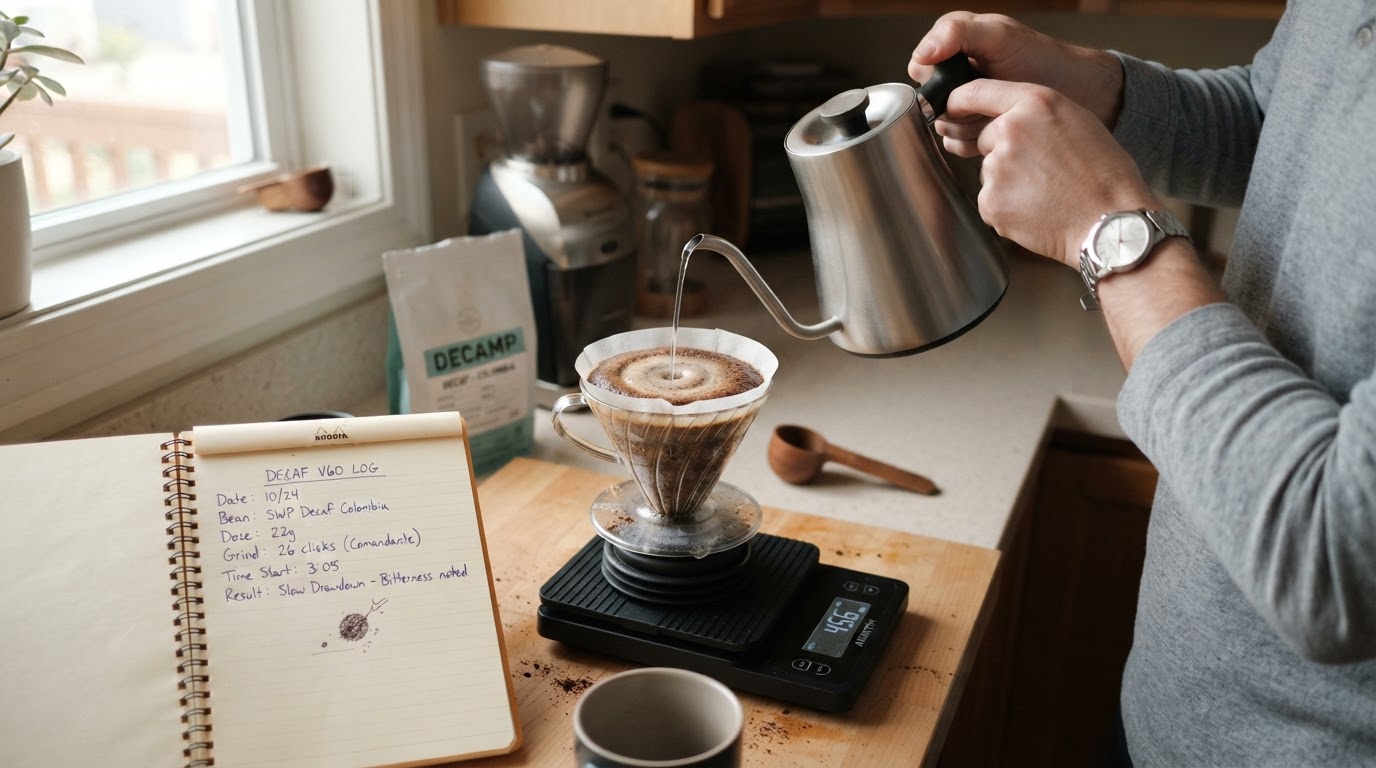
If that setting produces a level bed, a steady drawdown and a cup you like, you do not need a decaf-specific adjustment. Change the grind only when the flow or the cup gives you a reason. Some decafs behave like any other filter coffee; others produce more fines and may need a coarser setting. Judge the bag you have.
Match the symptom to the next trial
Keep the dose, paper and pour plan the same while you test one change. A small step on the grinder is enough to learn from; a large jump makes it harder to tell what helped.
What you see | First trial | What it addresses |
|---|---|---|
Water pools on the bed and the drawdown is much slower than usual | One small step coarser | Fine particles may be blocking the paper |
The bed drains very fast and the cup tastes thin | One small step finer | Less resistance may be letting water through too quickly |
The bed has dry patches, a crater or an uneven finish | Check paper seating and pour before changing the grind | Water may be bypassing coffee or channeling |
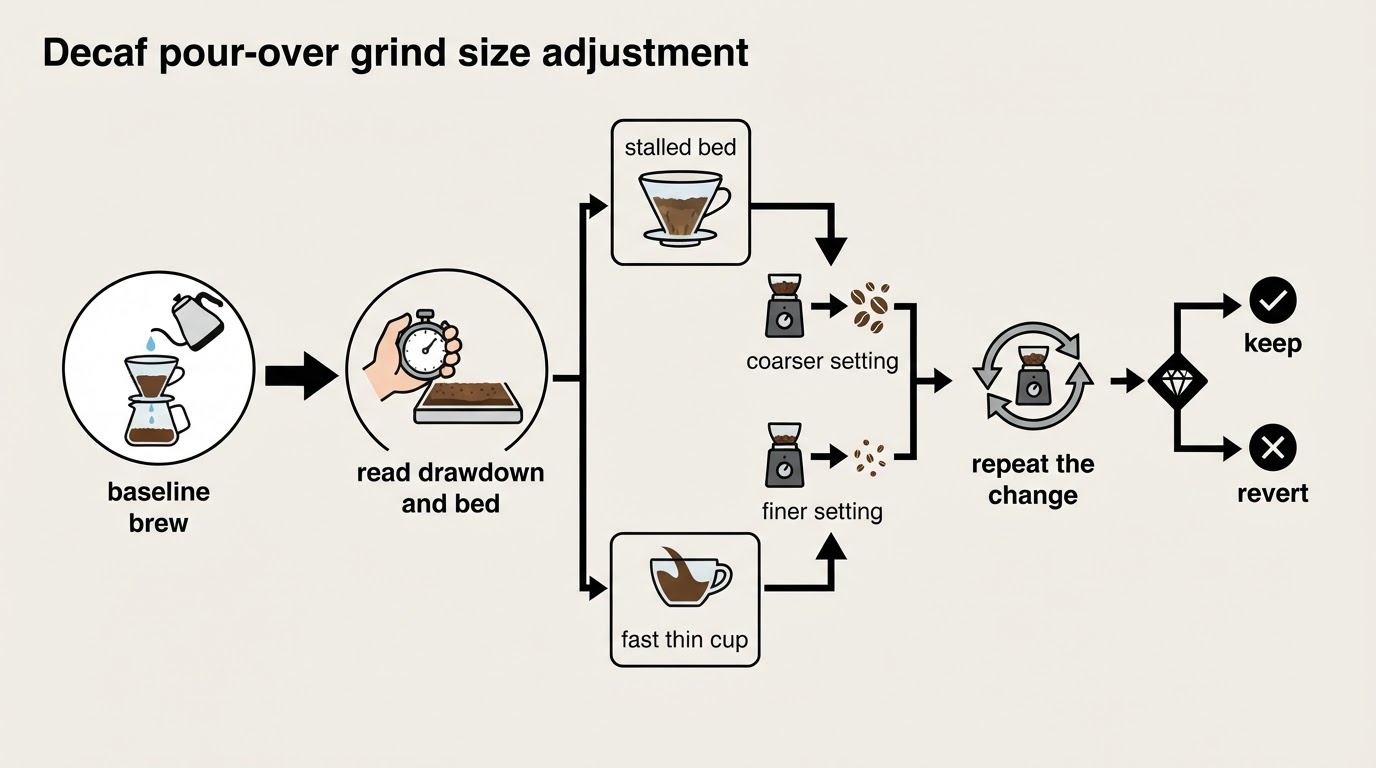
These are first trials, not diagnoses. A fast brew can come from a paper that is not seated, and bitterness or sourness can come from uneven flow as well as grind size. If a change seems to help, brew it again before you keep it.
Why some decaf coffees clog paper
In his analysis of percolation, Jonathan Gagné of Coffee ad Astra describes how fine particles can lodge in paper filters and slow the flow. When the paper clogs, water may pass through fewer paths, leaving some of the bed under-extracted while other parts take more flow. He specifically notes that some decaffeinated coffees can produce enough fines to clog paper filters. Read his four rules of optimal coffee percolation for the full explanation.
Gagné also notes that thicker or larger paper gives fines more places to lodge, and that heavy agitation can drive fines into the paper, so a gentler pour is another thing to try if the bed keeps stalling.
Set a repeatable brew
Weigh both coffee and water. Wimp Decaf's brewing guide recommends weighing both and offers 1:16, one part coffee to sixteen parts water, as a starting ratio. For example, 15 g of coffee to 240 g of water. That is roaster guidance for Wimp's coffee, not a universal decaf target, but it gives you a fixed ratio while you adjust the grind.
Use the same dripper, paper, dose, water weight and pour while adjusting. If stalling continues, check the filter seating and dripper outlet before making another grind change. Once the coffee drains consistently and tastes good to you, keep that setting.