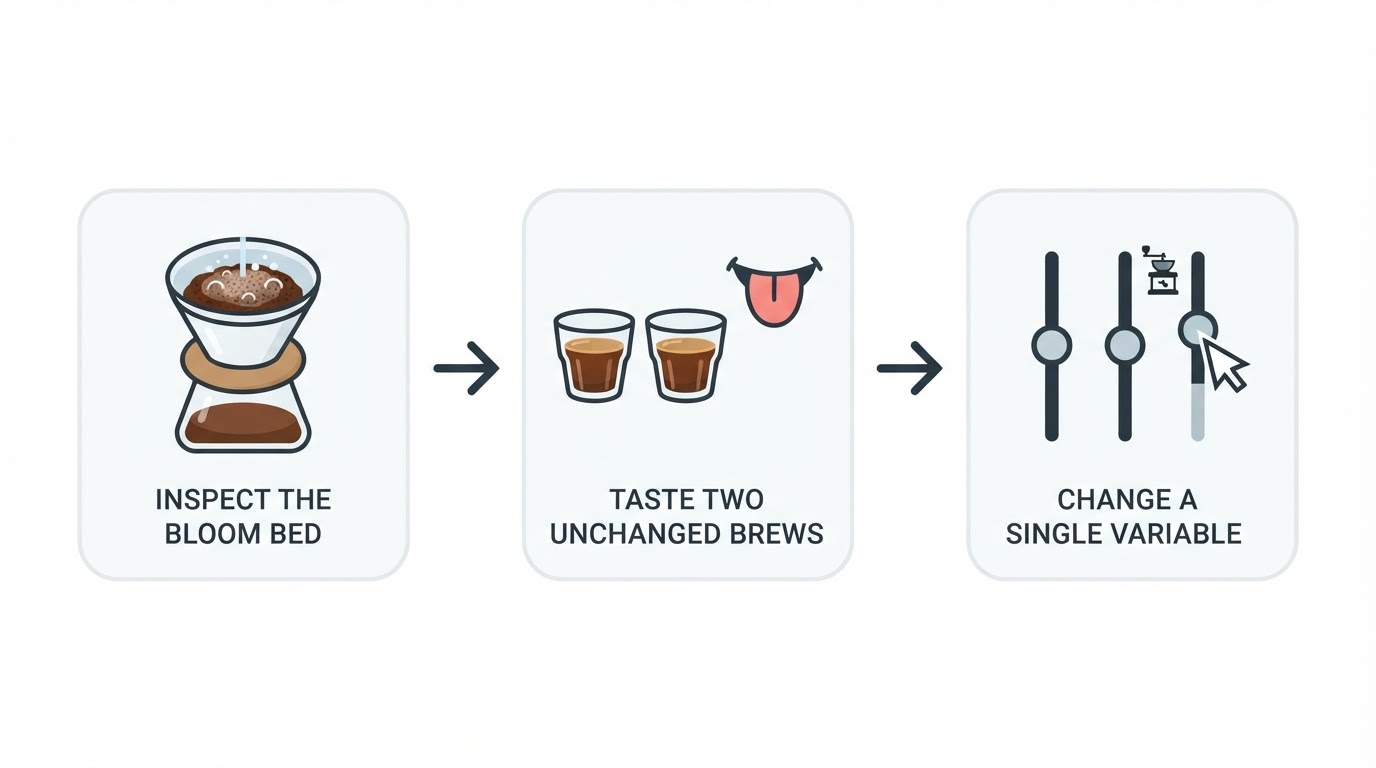
Coffee bubbles during the bloom as water releases gases trapped after roasting. Beans release gas while they rest, so a quieter bloom can reflect a change in the coffee rather than a brewing fault. Check for dry patches and taste the finished cup before deciding to change anything.
What the bloom is for
Counter Culture Coffee's pour-over guide describes the bloom as a small first pour that lets gases trapped during roasting escape, and it stresses saturating the entire coffee bed. Its rule of thumb is roughly twice the coffee's weight in bloom water: a 30 g dose gets about 60 g. That is a recipe starting point.
Roasted beans continue to release carbon dioxide after roasting, and that release changes as they rest (Hermanos Coffee Roasters). This helps explain why one bag blooms vigorously and another barely moves. Bubbles alone cannot date or grade a particular bag.
The bed tells you more than the bubbles
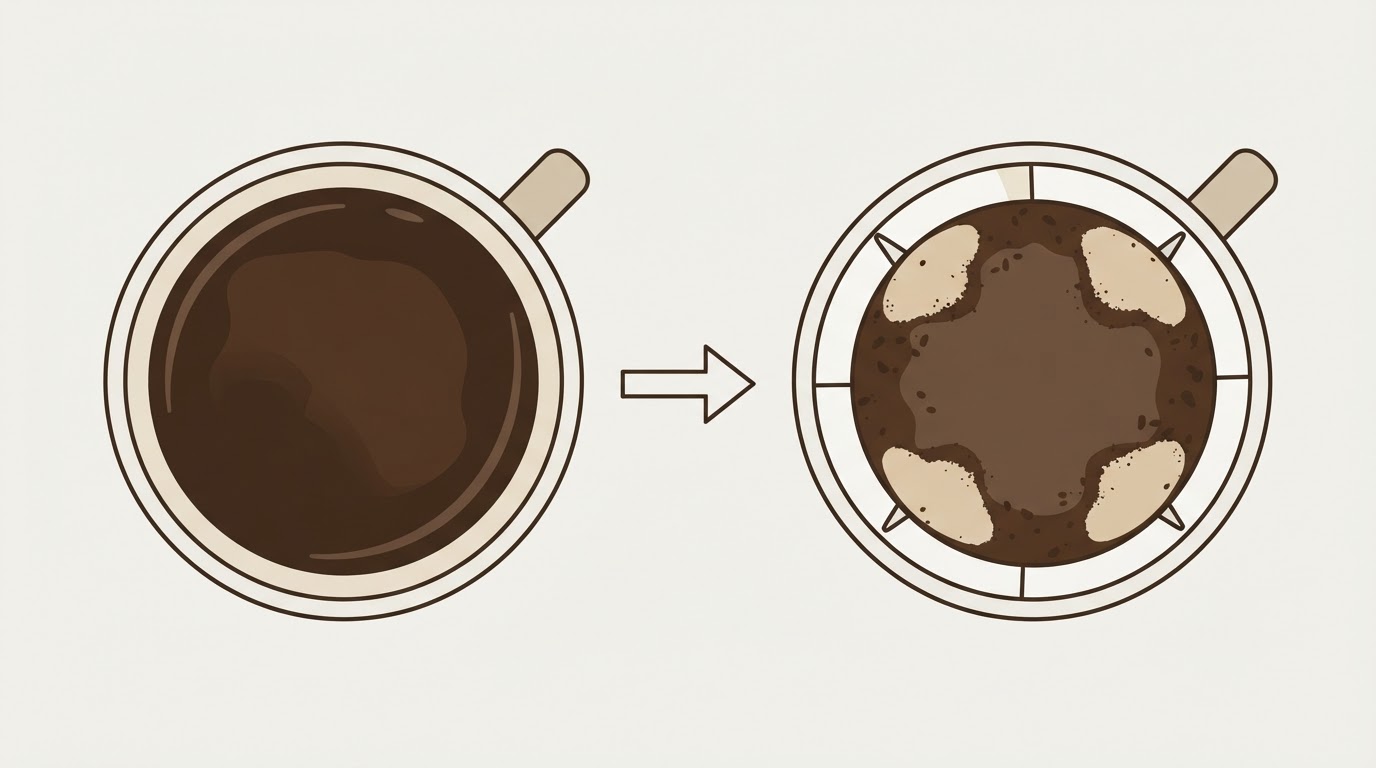
Look across the whole surface after the bloom pour, including the edge where the coffee meets the filter. A uniformly dark, wet surface is a useful visual check, even if it is quiet. Pale or dry islands mean water missed some grounds, which can leave the cup uneven.
What you see after the bloom pour | What it suggests | What to do |
|---|---|---|
An evenly wet bed with few or no bubbles | Little gas is visible, but the grounds are wet | Keep the recipe if the cup tastes good |
Dry patches or pale spots | Water bypassed some grounds | Aim a slower pour at those spots |
A foam dome with a dry ring at the filter | Foam does not prove every ground is saturated | Wet the ring before the main pour |
A wet surface but a disappointing cup | Bubble count does not identify the cause | Check the dose, water and pour against your brewing recipe before changing a setting |
Roast date is useful context
A roast date and storage details tell you how the coffee has rested, which affects how much gas may still be released. Coffee roasted more recently generally has more gas, so it can bloom more actively; a bag roasted longer ago may be quieter. Labels and storage vary, so the date is context. Our guide to resting coffee after roasting compares roaster recommendations and explains roast and opening dates.
What to do with a flat bloom
An evenly wet bed and a good cup
There is nothing to fix. Keep the same dose, grind, bloom volume and timing.
Dry patches or an uneven bed
Pour more slowly and aim the stream at the dry patches; stop before water runs down the filter wall. If your brewer allows it, a gentle swirl can help settle a sloped bed, but it is optional. Extend the bloom only enough to wet the dry grounds, then continue your normal recipe. Do not change grind or temperature solely because the bloom looked flat.